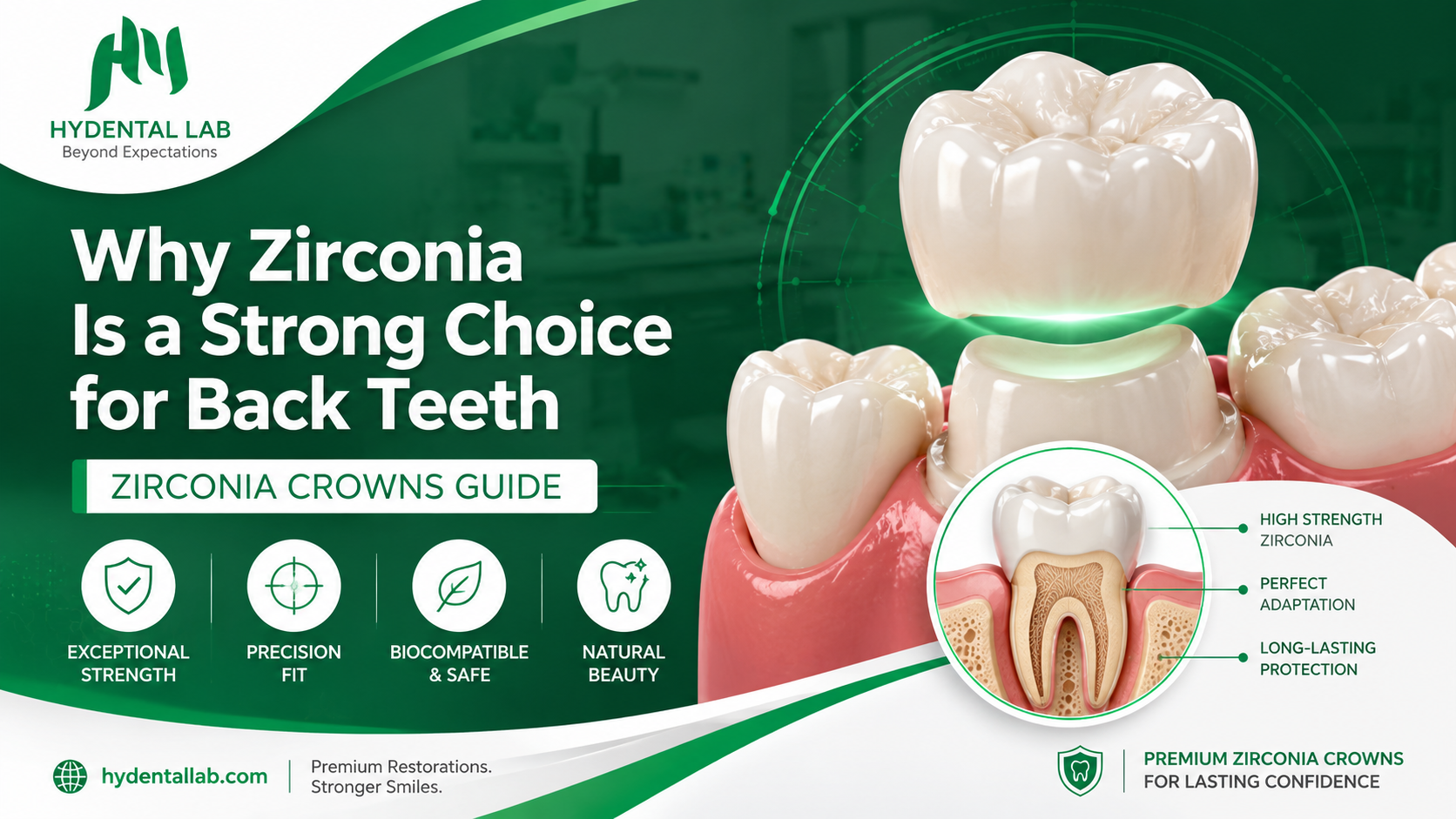
Why Zirconia Is a Strong Choice for Back Teeth: Zirconia Crowns Guide
Every day, back teeth get a hard beating. Most of the chewing force is borne by the molars and pre molars and the force isn’t that light. Those are in the range of 400 to 800 Newtons just in the molar region. For these reasons, it is one of the most critical decisions in restorative dentistry to choose the most appropriate material for restoring posterior teeth. When it comes to sourcing restorations at scale, the right material can mean the difference between remake rates, patient satisfaction and case success. Zirconia crowns have become the gold standard for back teeth and for very good reasons. Let’s go through what makes them a great choice.
Zirconia Handles What Other Materials Cannot
The constant stress of posterior occlusion is a problem for most crown materials. Porcelain chips. Composite wears down. Porcelain fused to metal (PFM) crowns, which were once considered a good choice for the posterior teeth, have a known problem: The top porcelain can crack with time. Zirconia is different. It is a high-strength ceramic with a flexural strength ranging from 900 to 1,200 MPa. For comparison, the strength of traditional feldspathic porcelain is approximately 60 to 150 MPa. The difference is noticeable. Most significantly, full-contour monolithic zirconia crowns are created from a single solid block. There is no layered porcelain on top. Nothing to chip. Nothing to delaminate. The crown you give is the crown you keep.
Why Full-Contour Zirconia Is the Right Design for Posterior Cases
When it comes to back teeth, the monolithic design of full-contour zirconia crowns is a significant advantage both clinically and operationally. The crown is one solid piece, so the risk of separating veneer layer under load is eliminated. A frequent failure mechanism in PFM and layered ceramic restorations, particularly in patients with bruxism and/or high occlusal forces. The reduction in finishing time is also a benefit for dental labs. Monolithic zirconia requires far less hand layering and characterization compared to traditional ceramics. That will increase the production without sacrificing quality. For clinics, it means a crown that fits perfectly due to CAD/CAM milling and remains undamaged and in place throughout its service life without frequent adjustments or replacements.
Durability That Holds Up Over Time
Having a strong crown at placement is one thing. Another crown that lasts five years, ten years, or fifteen years is another. The zirconia crowns have been proven to be long-lasting. They are not corrosive, deforming or degrading in oral conditions. Material retains shape and margin fit for years of functional use, even under heavy loading conditions especially important at the posterior thirds where fit precision has a direct correlation with the alignment of the bite. An important note: well-polished zirconia has wear rates similar to natural enamel on opposing teeth. This is an important benefit over less polished, harder ceramics, which may cause excessive dentin wear over time. For B2B purchasers, that longevity directly impacts the business. Fewer long-term failures lead to fewer remakes, fewer complaints, and better clinical relationships.
Zirconia vs Other Posterior Crown Materials
| Material | Strength | Chipping Risk | Longevity |
| Zirconia | Very High | None (monolithic) | 15+ years |
| PFM | Moderate | High (porcelain layer) | 10–12 years |
| Metal (Gold) | High | None | Long but visible |
| All-Ceramic | Moderate | Moderate | 8–10 years |
Zirconia crowns consistently outperform alternatives in the posterior zone — especially on the metrics that matter most for B2B buyers: reliability, remake rates, and patient satisfaction.
Conclusion
With regard to posterior restorations, zirconia crowns prove their value in providing strength, longevity, and stable clinical performance. The monolithic design avoids failure points of traditional materials, and the longevity decreases the number of remakes and patient callbacks. When quality and reliability are essential for restoring posterior teeth, HY Dental Lab can deliver precision-milled crowns to satisfy the demands of back-teeth cases.
Work with HY Dental Lab, for precision-milled zirconia crowns, that satisfy the best clinical standards. Contact us today and talk to us about your sourcing needs.
FAQs
Is zirconia durable enough to be used for molar crowns?
Yes. Zirconia crowns have a flexural strength of 1200 MPa, which is one of the highest in the crown material market and can tolerate the forces exerted by the molar teeth.
Do zirconia crowns chip on back teeth?
Full-contour monolithic zirconia has no porcelain layer to chip. It is milled from one solid body, and thus fracture and chipping do not occur easily under normal occlusal conditions.
What is the lifespan of zirconia crowns for back teeth?
Properly maintained zirconia crowns on back teeth last for 15 years or longer. They are one of the most durable choices on the market.
Are zirconia crowns better than PFM crowns for back teeth?
Yes, for most of the posterior cases. Zirconia is strong, like porcelain, but not prone to chipping of the porcelain layer; it has no visible metal margins and has overall better long-term durability.